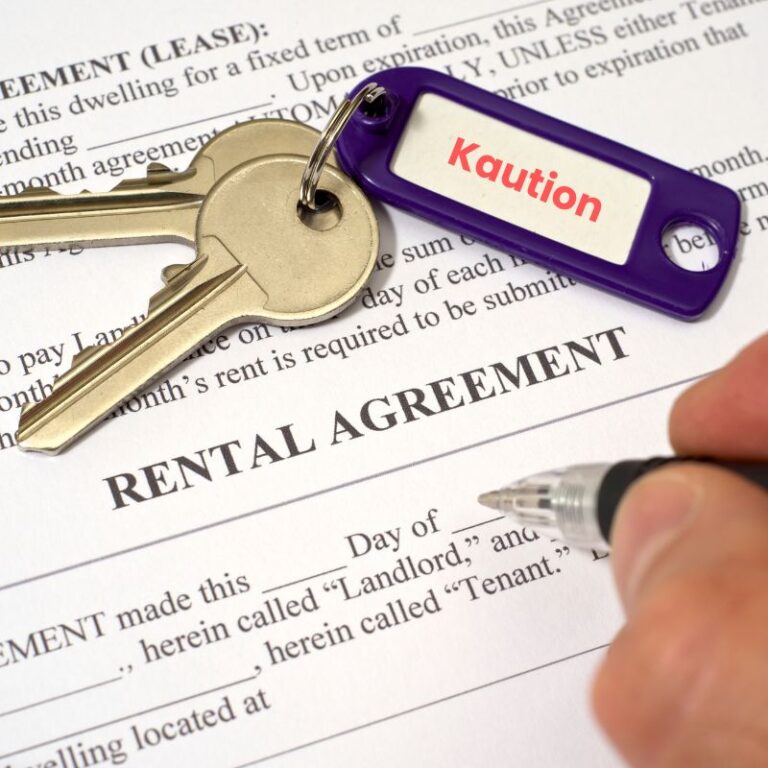
Understanding Your Rental Agreement – Additional Costs, Notice Period, and Important Clauses
A rental agreement in Germany is more than just a piece of paper. It’s a legally binding document that regulates many rights, but also obligations. Many problems arise not because landlords are unfair, but because tenants don’t fully understand the contract.
Especially for people who are new to Germany, tenancy law is complex. Terms like additional costs, notice period, or cosmetic repairs aren’t self-explanatory. This article will help you better understand a rental agreement and avoid common mistakes.
Why rental agreements in Germany are so detailed
In Germany, many things are regulated in writing. A rental agreement is intended to:
- avoid conflicts
- secure rights
- establish clear rules
What isn’t in the contract is often difficult to enforce. Therefore, rental agreements are usually long and detailed.
Important:
A rental agreement cannot contain everything, even if it seems that way. Some clauses are invalid, even if you have signed it.
Base rent, warm rent and additional costs – what’s what?
A common misconception is that rent is a fixed amount.
Base rent
The basic rent is:
- the rent for the apartment itself
- excluding heating
- excluding water
- excluding operating costs
It forms the basis for many calculations, for example, rent increases.
Extra costs
Additional costs are expenses associated with living in a building. These often include:
- Heating
- Water
- Garbage collection
- Building cleaning
- Property tax
- Caretaker
Not all of these costs can be passed on to the tenant. For example, landlords cannot pass on administrative costs to tenants.
Rent including utilities
The total rent (including utilities) is:
Base rent + additional costs
It’s the amount you pay monthly. However, you may still have to pay extra at the end of the year.
Utility bill – often a shock
Once a year, you receive a utility bill. Many people are shocked because they have to pay extra.
This is normal if:
- your consumption was higher than expected
- energy prices have increased
- you agreed to pay too little in advance
You have the right to:
- check the bill
- inspect the supporting documents
- dispute any errors
The bill must be understandable. You are allowed to question any unclear items.
Notice period – don’t just move out
In Germany, you can’t just move out overnight.
Statutory notice period
For tenants, the following generally applies:
three months‘ notice period
The notice of termination must:
- be in writing
- received by the landlord in good time
- be clearly worded
Emails or WhatsApp messages are often not sufficient.
Termination by the landlord
Landlords have a harder time terminating a tenancy than tenants.
They need:
- a legal reason
- a proper justification
- adherence to notice periods
Personal use is a common reason, but even here, rules apply.
Fixed-term lease – caution
Some rental agreements are fixed-term. This means:
- they end automatically
- no notice of termination is required
- no right to renewal
Fixed-term agreements are only permitted if a specific reason is given, for example, future personal use.
If this reason is missing, the fixed-term agreement may be invalid.
Cosmetic repairs – a frequent point of contention
Many rental agreements contain clauses regarding renovations.
Important to know:
- Not everything in the contract is legally valid
- Fixed renovation deadlines are often invalid
- You don’t automatically have to repaint just because you’re moving out
What matters is:
- the condition of the apartment
- the handover protocol
- the actual wear and tear
Pets in the rental agreement
Many rental agreements contain clauses regarding pets.
Generally speaking:
- Small pets are allowed
- Dogs and cats often require permission
A blanket ban is frequently not permissible, but case-by-case decisions are possible.
Always:
- Ask beforehand
- Get it in writing
Subletting – not easily possible
Subletting an apartment or room is not automatically permitted.
Often you need:
the landlord’s permission.
However, in certain cases you have a right to sublet, for example, for:
professional reasons or extended absences.
Subletting without permission can lead to eviction.
Typical mistakes made by tenants
Very common mistakes:
- Not reading the contract completely
- Not understanding the terminology
- Signing due to time pressure
- Ignoring additional costs
- Incorrectly calculating notice periods
In Germany, it pays to check beforehand rather than arguing later.
Help with problems
If you’re unsure:
- Tenants‘ Association
- Consumer Advice Center
- Advice Centers
These organizations often offer affordable or free assistance and can save you a lot of trouble.
Rental agreement and integration
Understanding your rental agreement:
- leads to a more relaxed life
- fears fewer conflicts
- becomes more confident
Housing is a central part of life in Germany. Security comes from knowledge – not from conforming out of fear.
Conclusion: It’s worth reading.
A rental agreement isn’t a legal obligation, but rather a protective instrument – for both parties.
You don’t need to be a lawyer.
But you should know what you’re signing.
Understanding your rental agreement leads to a more peaceful, secure, and ultimately better living situation.
About the author
Anita Grabowski is an integration and career advisor for Indian IT-Professionals in Germany and founder of Germandia.
She supports highly qualified Indian talent who come to Germany with ambitions but are confronted with repeated job rejections, bureaucratic hurdles, and the pressure of obtaining a visa. Her work focuses on optimizing resumes according to German standards, structured application strategies, interview preparation, and practical guidance through the German system.
Anita combines clarity, structure, and cultural understanding to help her clients position themselves optimally in the German job market. Her approach reduces uncertainty, increases the chances of job interviews, and boosts self-confidence in one of the most important phases of moving and building a career.
Her book “Deutsch sprechen ohne Angst” (Speaking German Without Fear) reflects her belief that courage and drive are the foundation for long-term success in a new country.