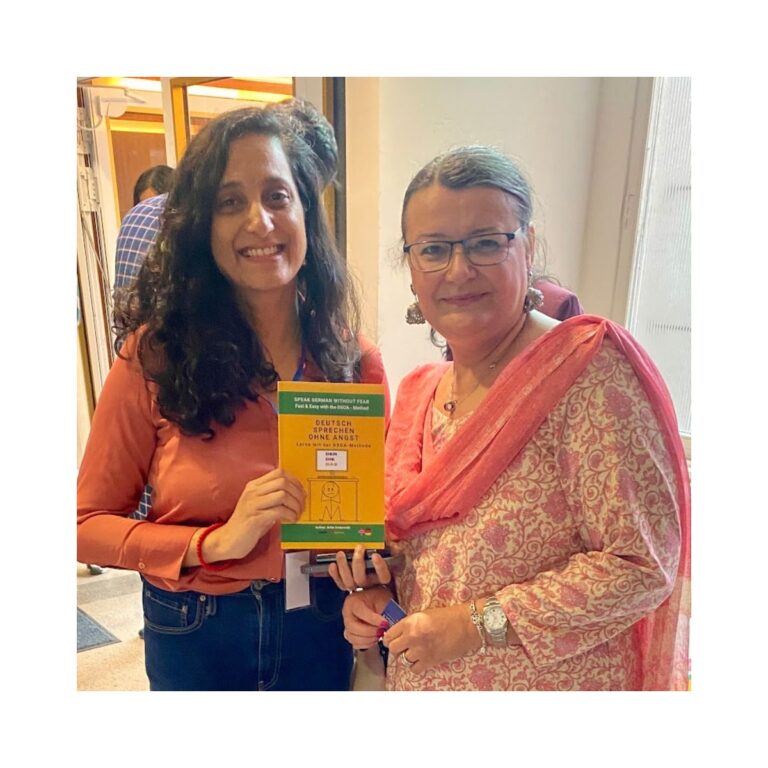
Recently, I was invited to a meeting at the Senate of the Free and Hanseatic City of Hamburg to discuss international employee onboarding in Germany and the challenges international professionals face when building a career and a life here.
I met with Julie-Ann Shiraishi from the Senate Chancellery, Desk of South Asia, Middle East and North Africa.
For me, this was an opportunity to share something I have observed repeatedly over the years through my work with international professionals: finding a job in Germany is only one part of the journey.
The challenges do not automatically disappear once an employment contract has been signed.
During our conversation, I spoke about difficulties international professionals can experience with communication, German workplace culture, integration and everyday life in Germany.
Julie-Ann Shiraishi pointed me towards a resource I had not known before: TK’s say:HELLO, a digital service designed to help international employees with practical questions about starting their life in Germany.
I looked into the service afterwards and decided to share it here because I believe more international professionals and employers should know that it exists.
One detail caught my attention in particular.
TK recommends making say:HELLO available to international employees before they travel to Germany.
That reflects something I have become increasingly convinced of through my own work:
International employee onboarding in Germany should not begin on the first working day. It should begin before arrival.
What TK’s say:HELLO Shows About International Employee Onboarding in Germany
Techniker Krankenkasse has developed say:HELLO, a digital onboarding service for international employees. Its interactive avatar VANESSA answers general questions about starting a new life in Germany, including questions about social security, insurance, taxes and other practical aspects of settling in.
The service is available in six languages, including German, English and Hindi, and TK states that it is free to use. According to TK, questions remain anonymous, IP addresses are not stored and the avatar does not have access to employees’ personal insurance data.
For employers, this is interesting for another reason. TK explicitly recommends making say:HELLO available to international employees before they travel to Germany, so that onboarding can begin early.
That small recommendation points to a much bigger issue.
Why should an employee wait until arriving in Germany before learning how Germany works?
International Employee Onboarding in Germany Is More Than Paperwork
When we talk about onboarding international professionals, the discussion often focuses on administrative processes. Contracts, insurance, registration, residence permits and other formalities are obviously important.
But successful integration does not end when the paperwork is complete.
An international employee can have the correct visa, a signed employment contract, health insurance and an apartment and still feel completely unprepared for everyday working life in Germany.
This is where companies need to distinguish between administrative onboarding and human integration.
An employee may need to understand how directly colleagues communicate, how feedback is given, when they are expected to ask questions, how much initiative a manager expects, what punctuality means in a particular workplace or how disagreements are normally addressed.
None of these issues necessarily appear in an employment contract.
Yet they can determine whether someone feels confident at work.
TK itself addresses onboarding much more broadly than health insurance alone. Its employer information discusses personal contacts, integration, international teams and practical support during the first phase in Germany.
Why International Employees Need Support Before Their First Working Day
Imagine an engineer, IT professional or other skilled worker who has accepted a position in Germany.
For the employer, this person is the new employee who starts next month.
For the employee, however, almost every part of life may be changing at the same time.
They may be leaving their family, familiar social structures and professional network behind. They may have to communicate in a language they do not fully master. They are entering a workplace culture they have never experienced before while simultaneously learning how to navigate housing, banking, insurance, healthcare, transportation and German bureaucracy.
Then comes the first working day.
The employee wants to make a good impression and may therefore hesitate to admit when something is unclear. A manager may interpret silence as understanding. The employee may interpret direct feedback as personal criticism. Colleagues may assume that certain workplace expectations are obvious when they are not obvious at all to someone who has never worked in Germany.
These situations do not necessarily result from a lack of professional competence.
They can result from a lack of preparation.
That is why good international employee onboarding in Germany needs to answer questions before they become problems.
Digital Tools Can Solve Part of the International Onboarding Problem
I find the idea behind say:HELLO particularly interesting because it recognizes something employers should take seriously: international employees have many questions, and those questions do not conveniently arise between 9 a.m. and 5 p.m.
A digital assistant can therefore be extremely useful.
Someone wondering late in the evening how German health insurance works does not necessarily need an HR appointment the next morning. If reliable information is available immediately and in a language the employee understands, the question may be resolved within minutes.
That also benefits HR departments. TK presents say:HELLO as a way of reducing the number of routine questions directed to employers, giving them more time for employees’ individual challenges.
This is exactly where technology makes sense.
But it also shows us where technology reaches its limits.
Why International Employee Onboarding Still Needs Human Support
A digital avatar can explain what a German tax identification number is.
It cannot necessarily notice that a new employee has stopped speaking during meetings because they are afraid of making mistakes in German.
It can provide information about sick leave.
It cannot necessarily recognize that an employee interprets their manager’s communication style as rejection.
It can answer standard questions about arriving in Germany.
But integration also involves confidence, communication, misunderstandings, workplace relationships and the ability to ask for help.
These issues are individual.
And this is why I believe the strongest approach to international employee onboarding in Germany is not digital or human support.
It is digital and human support.
Reliable digital resources can answer standardized questions quickly. Human support can focus on situations where information alone is not enough.
What Employers Should Prepare Before an International Employee Arrives
International onboarding should begin as soon as the employment relationship becomes real, not only when the employee walks through the office door.
Before arrival, an employee can already learn how the German workplace operates, what communication may look like, how the first weeks are structured and where reliable information can be found.
Employers can also establish who the employee should contact when questions arise. This sounds simple, but having a clearly identified contact person can make an enormous difference when someone is trying to navigate an unfamiliar environment.
The objective should not be to explain every possible situation in advance.
The objective is to make sure the employee does not arrive completely unprepared.
And this leads to the question that matters most:
What should international employee onboarding in Germany actually include if we want international professionals not only to arrive, but to stay and succeed?
International Employee Onboarding in Germany Needs Three Phases
I would divide effective international onboarding into three phases: before arrival, the first weeks and longer-term integration.
Before arrival, the employee needs orientation. They should know what to expect from Germany, from their employer and from the working environment.
During the first weeks, they need practical support and clear communication. This is the period when dozens of small questions arise, from workplace procedures to everyday life.
After the initial excitement has passed, another phase begins. The employee needs to become genuinely integrated into the team, communicate confidently, understand expectations and gradually become independent.
This last phase is particularly important because onboarding should not simply end after a checklist has been completed.
Before Arrival: Prepare International Employees for Germany
Before travelling to Germany, international professionals should receive more than relocation information.
They should understand basic aspects of German working culture, communication and expectations.
What does a German manager mean when they ask an employee to work independently? How openly can someone disagree with a colleague? When should an employee ask questions? How is feedback normally communicated? What happens if someone makes a mistake?
There is no single German workplace culture that applies identically to every company. But there are patterns and expectations that international employees can be prepared for.
This is also the right stage to provide reliable external resources.
For questions relating to insurance and social security, employers can direct employees to services such as TK’s say:HELLO. For broader official information about working and living in Germany, the federal government’s Make it in Germany portal is another useful resource.
The employer does not need to personally answer every question.
The employer needs to create a system in which the employee knows where to find trustworthy answers.
The First Weeks of International Employee Onboarding in Germany
The first weeks should not consist of handing someone a laptop, introducing five colleagues and hoping everything works out.
International employees need clear expectations.
Who is responsible for what? Who should they approach with questions? What are their priorities during the first month? How will their performance be evaluated? What does their manager expect after three months?
Clear answers reduce uncertainty for everyone.
This matters because an international employee may not immediately tell the employer that something is wrong.
They may worry that asking too many questions will make them look incompetent. They may not know whether a problem is normal. They may simply assume that they have to manage everything themselves.
Regular conversations during the first months can identify these problems much earlier.
German Communication Is Part of International Employee Integration
Language deserves special attention.
Someone may be able to perform their technical job in English and still struggle to become fully integrated into a German workplace.
The problem is not always grammar.
It may be the confidence to join an informal conversation during lunch, understand colleagues speaking quickly, make a phone call, ask a spontaneous question or explain a problem without mentally preparing every sentence first.
This is why I distinguish between learning German and using German.
Traditional language courses are important. But at some point, people also need a safe environment in which they can actually speak, make mistakes, ask questions and become more spontaneous.
This is one of the reasons I have been developing Germandia’s work around spoken German alongside career and integration support.
My book Speak German Without Fear: The DSOA Method addresses precisely this barrier: knowing some German but being afraid to actually use it.
Speak German Without Fear: The DSOA Method
International Employee Onboarding Should Include the Manager
Integration cannot be delegated entirely to the international employee.
Managers also need to understand that someone entering a new country and a new company simultaneously may require different communication during the first months.
That does not mean lowering professional expectations.
It means making expectations clearer.
A short conversation between the employer and the person supporting the employee can reveal whether misunderstandings are developing, whether communication is working and whether additional support would help.
The objective is not permanent dependency.
The objective is the opposite: helping the employee become confident and independent more quickly.
From International Employee Onboarding to Retention
Germany spends considerable effort attracting international skilled professionals.
But recruitment should not be the finish line.
The real measure of success is what happens afterwards.
Does the employee understand the workplace? Can they communicate effectively? Do they feel able to ask questions? Can they navigate everyday life? Are they becoming part of the team? Can the employer recognize problems before they become reasons to leave?
International recruitment without integration can become expensive for both sides.
The employee may have relocated thousands of kilometres, invested savings and changed their entire life.
The employer may have invested significant time and resources in recruitment, relocation and onboarding.
Both have an interest in making the relationship work.
What TK’s say:HELLO Gets Right About International Employee Onboarding
The most important lesson I take from TK’s approach is not the technology itself.
It is the timing.
TK tells employers that they can introduce say:HELLO before their employees travel to Germany.
That is exactly the direction I believe international recruitment needs to take.
Do not wait for confusion before providing information.
Do not wait for isolation before thinking about integration.
Do not wait for communication problems before explaining workplace culture.
And do not wait until an employee considers leaving before asking whether they actually feel settled.
Preparation should start before arrival. Integration should continue after onboarding.
How My Hamburg Senate Conversation Reinforced Germandia’s Direction
My conversation with Julie-Ann Shiraishi at the Senate Chancellery in Hamburg reinforced something I had already been seeing through my work.
The challenges international professionals experience are not limited to writing a German CV, getting through an interview or securing an employment contract.
Getting the job is important.
But what happens before and after recruitment matters just as much.
The question is therefore bigger:
How do we make sure international professionals are not only recruited, but actually supported in building a successful working life in Germany?
There will never be one organization that solves every part of this challenge.
Resources such as TK’s say:HELLO can provide reliable information in areas such as insurance and social security. Employers and managers have their own responsibilities. Language providers can support language development. Official institutions provide information and administrative guidance.
And there is another area that deserves attention: the human side of arriving and working in a new country.
That is also the direction in which I am developing Germandia.
My work started with international professionals who needed help with CVs, applications and understanding the German job market. Germandia is now expanding its focus to include preparation for German working culture, workplace communication, spoken German, the first working day and integration into professional and everyday life.
The aim is not to replace HR departments, relocation providers, language schools, health insurers or official institutions.
It is to help international professionals understand where to find reliable support while concentrating on the areas where personal guidance can make a difference.
Better International Employee Onboarding Benefits Everyone
International professionals do not need to know everything about Germany before they arrive.
They need realistic expectations, reliable information, clear contacts and someone who recognizes when they need more than a link or a checklist.
Employers, meanwhile, should not have to answer every insurance, cultural, language and everyday-life question themselves.
A well-designed onboarding system combines official information, digital tools, internal HR processes and personal support.
TK’s say:HELLO is an interesting example of one piece of that system.
For me, discovering it through my conversation at the Hamburg Senate also demonstrated something else: useful solutions already exist, but people need to know about them.
That is one reason I wanted to share this resource here.
If Germany wants international professionals not only to come here but also to build successful careers and lives here, international employee onboarding in Germany must begin before arrival and continue until arrival has become integration.
Related Germandia Articles
How to Apply for Jobs in Germany as an IT Professional
About the Author
Anita Grabowski is the founder of Germandia.
Since 2019, she has been supporting international professionals with questions about the German job market, CVs, applications, professional positioning, communication and integration.
Through Germandia, she is developing practical support for international professionals and employers, with a growing focus on preparation before arrival, German workplace culture, communication and long-term integration.
Her goal is simple: international professionals should not only find their way to Germany. They should have a realistic opportunity to build a successful career and life in Germany.
Search Terms
international employee onboarding in Germany, international professionals Germany, international employee integration Germany, onboarding international employees, foreign employees Germany, German workplace culture, employee integration Germany, TK say HELLO, international skilled workers Germany, Hamburg Senate international professionals
Sources
Techniker Krankenkasse: New to Germany? Let’s say:HELLO!
Techniker Krankenkasse: say:HELLO! Answers to Your International Employees‘ Questions
Techniker Krankenkasse: Onboarding International Professionals
Techniker Krankenkasse: How International Professionals Get a Good Start in Germany
Blog Title
What a Hamburg Senate Meeting Taught Me About International Employee Onboarding in Germany
Focus Keyphrase
international employee onboarding in Germany
SEO Title
International Employee Onboarding in Germany: Hamburg Senate Insights
Slug
international-employee-onboarding-germany
Meta Description
A Hamburg Senate meeting about international professionals led me to TK’s say:HELLO and important insights into international employee onboarding in Germany.
What a Hamburg Senate Meeting Taught Me About International Employee Onboarding in Germany
Recently, I was invited to a meeting at the Senate of the Free and Hanseatic City of Hamburg to discuss the situation of international professionals in Germany and the challenges they face when building a career and a life here.
I met with Julie-Ann Shiraishi from the Senate Chancellery, Desk of South Asia, Middle East and North Africa.
For me, this was an opportunity to share something I have observed repeatedly over the years through my work with international professionals: finding a job in Germany is only one part of the journey.
The challenges do not automatically disappear once an employment contract has been signed.
During our conversation, I spoke about difficulties international professionals can experience with communication, German workplace culture, integration and everyday life in Germany.
Julie-Ann Shiraishi pointed me towards a resource I had not known before: TK’s say:HELLO, a digital service designed to help international employees with practical questions about starting their life in Germany.
I looked into the service afterwards and decided to share it here because I believe more international professionals and employers should know that it exists.
One detail caught my attention in particular.
TK recommends making say:HELLO available to international employees before they travel to Germany.
That reflects something I have become increasingly convinced of through my own work:
International employee onboarding in Germany should not begin on the first working day. It should begin before arrival.
What TK’s say:HELLO Shows About International Employee Onboarding in Germany
Techniker Krankenkasse has developed say:HELLO, a digital onboarding service for international employees. Its interactive avatar VANESSA answers general questions about starting a new life in Germany, including questions about social security, insurance, taxes and other practical aspects of settling in.
The service is available in six languages, including German, English and Hindi, and TK states that it is free to use. According to TK, questions remain anonymous, IP addresses are not stored and the avatar does not have access to employees’ personal insurance data.
For employers, this is interesting for another reason. TK explicitly recommends making say:HELLO available to international employees before they travel to Germany, so that onboarding can begin early.
That small recommendation points to a much bigger issue.
Why should an employee wait until arriving in Germany before learning how Germany works?
International Employee Onboarding in Germany Is More Than Paperwork
When we talk about onboarding international professionals, the discussion often focuses on administrative processes. Contracts, insurance, registration, residence permits and other formalities are obviously important.
But successful integration does not end when the paperwork is complete.
An international employee can have the correct visa, a signed employment contract, health insurance and an apartment and still feel completely unprepared for everyday working life in Germany.
This is where companies need to distinguish between administrative onboarding and human integration.
An employee may need to understand how directly colleagues communicate, how feedback is given, when they are expected to ask questions, how much initiative a manager expects, what punctuality means in a particular workplace or how disagreements are normally addressed.
None of these issues necessarily appear in an employment contract.
Yet they can determine whether someone feels confident at work.
TK itself addresses onboarding much more broadly than health insurance alone. Its employer information discusses personal contacts, integration, international teams and practical support during the first phase in Germany.
Why International Employees Need Support Before Their First Working Day
Imagine an engineer, IT professional or other skilled worker who has accepted a position in Germany.
For the employer, this person is the new employee who starts next month.
For the employee, however, almost every part of life may be changing at the same time.
They may be leaving their family, familiar social structures and professional network behind. They may have to communicate in a language they do not fully master. They are entering a workplace culture they have never experienced before while simultaneously learning how to navigate housing, banking, insurance, healthcare, transportation and German bureaucracy.
Then comes the first working day.
The employee wants to make a good impression and may therefore hesitate to admit when something is unclear. A manager may interpret silence as understanding. The employee may interpret direct feedback as personal criticism. Colleagues may assume that certain workplace expectations are obvious when they are not obvious at all to someone who has never worked in Germany.
These situations do not necessarily result from a lack of professional competence.
They can result from a lack of preparation.
That is why good international employee onboarding in Germany needs to answer questions before they become problems.
Digital Tools Can Solve Part of the International Onboarding Problem
I find the idea behind say:HELLO particularly interesting because it recognizes something employers should take seriously: international employees have many questions, and those questions do not conveniently arise between 9 a.m. and 5 p.m.
A digital assistant can therefore be extremely useful.
Someone wondering late in the evening how German health insurance works does not necessarily need an HR appointment the next morning. If reliable information is available immediately and in a language the employee understands, the question may be resolved within minutes.
That also benefits HR departments. TK presents say:HELLO as a way of reducing the number of routine questions directed to employers, giving them more time for employees’ individual challenges.
This is exactly where technology makes sense.
But it also shows us where technology reaches its limits.
Why International Employee Onboarding Still Needs Human Support
A digital avatar can explain what a German tax identification number is.
It cannot necessarily notice that a new employee has stopped speaking during meetings because they are afraid of making mistakes in German.
It can provide information about sick leave.
It cannot necessarily recognize that an employee interprets their manager’s communication style as rejection.
It can answer standard questions about arriving in Germany.
But integration also involves confidence, communication, misunderstandings, workplace relationships and the ability to ask for help.
These issues are individual.
And this is why I believe the strongest approach to international employee onboarding in Germany is not digital or human support.
It is digital and human support.
Reliable digital resources can answer standardized questions quickly. Human support can focus on situations where information alone is not enough.
What Employers Should Prepare Before an International Employee Arrives
International onboarding should begin as soon as the employment relationship becomes real, not only when the employee walks through the office door.
Before arrival, an employee can already learn how the German workplace operates, what communication may look like, how the first weeks are structured and where reliable information can be found.
Employers can also establish who the employee should contact when questions arise. This sounds simple, but having a clearly identified contact person can make an enormous difference when someone is trying to navigate an unfamiliar environment.
The objective should not be to explain every possible situation in advance.
The objective is to make sure the employee does not arrive completely unprepared.
And this leads to the question that matters most:
What should international employee onboarding in Germany actually include if we want international professionals not only to arrive, but to stay and succeed?
International Employee Onboarding in Germany Needs Three Phases
I would divide effective international onboarding into three phases: before arrival, the first weeks and longer-term integration.
Before arrival, the employee needs orientation. They should know what to expect from Germany, from their employer and from the working environment.
During the first weeks, they need practical support and clear communication. This is the period when dozens of small questions arise, from workplace procedures to everyday life.
After the initial excitement has passed, another phase begins. The employee needs to become genuinely integrated into the team, communicate confidently, understand expectations and gradually become independent.
This last phase is particularly important because onboarding should not simply end after a checklist has been completed.
Before Arrival: Prepare International Employees for Germany
Before travelling to Germany, international professionals should receive more than relocation information.
They should understand basic aspects of German working culture, communication and expectations.
What does a German manager mean when they ask an employee to work independently? How openly can someone disagree with a colleague? When should an employee ask questions? How is feedback normally communicated? What happens if someone makes a mistake?
There is no single German workplace culture that applies identically to every company. But there are patterns and expectations that international employees can be prepared for.
This is also the right stage to provide reliable external resources.
For questions relating to insurance and social security, employers can direct employees to services such as TK’s say:HELLO. For broader official information about working and living in Germany, the federal government’s Make it in Germany portal is another useful resource.
The employer does not need to personally answer every question.
The employer needs to create a system in which the employee knows where to find trustworthy answers.
The First Weeks of International Employee Onboarding in Germany
The first weeks should not consist of handing someone a laptop, introducing five colleagues and hoping everything works out.
International employees need clear expectations.
Who is responsible for what? Who should they approach with questions? What are their priorities during the first month? How will their performance be evaluated? What does their manager expect after three months?
Clear answers reduce uncertainty for everyone.
This matters because an international employee may not immediately tell the employer that something is wrong.
They may worry that asking too many questions will make them look incompetent. They may not know whether a problem is normal. They may simply assume that they have to manage everything themselves.
Regular conversations during the first months can identify these problems much earlier.
German Communication Is Part of International Employee Integration
Language deserves special attention.
Someone may be able to perform their technical job in English and still struggle to become fully integrated into a German workplace.
The problem is not always grammar.
It may be the confidence to join an informal conversation during lunch, understand colleagues speaking quickly, make a phone call, ask a spontaneous question or explain a problem without mentally preparing every sentence first.
This is why I distinguish between learning German and using German.
Traditional language courses are important. But at some point, people also need a safe environment in which they can actually speak, make mistakes, ask questions and become more spontaneous.
This is one of the reasons I have been developing Germandia’s work around spoken German alongside career and integration support.
My book Speak German Without Fear: The DSOA Method addresses precisely this barrier: knowing some German but being afraid to actually use it.
Speak German Without Fear: The DSOA Method
International Employee Onboarding Should Include the Manager
Integration cannot be delegated entirely to the international employee.
Managers also need to understand that someone entering a new country and a new company simultaneously may require different communication during the first months.
That does not mean lowering professional expectations.
It means making expectations clearer.
A short conversation between the employer and the person supporting the employee can reveal whether misunderstandings are developing, whether communication is working and whether additional support would help.
The objective is not permanent dependency.
The objective is the opposite: helping the employee become confident and independent more quickly.
From International Employee Onboarding to Retention
Germany spends considerable effort attracting international skilled professionals.
But recruitment should not be the finish line.
The real measure of success is what happens afterwards.
Does the employee understand the workplace? Can they communicate effectively? Do they feel able to ask questions? Can they navigate everyday life? Are they becoming part of the team? Can the employer recognize problems before they become reasons to leave?
International recruitment without integration can become expensive for both sides.
The employee may have relocated thousands of kilometres, invested savings and changed their entire life.
The employer may have invested significant time and resources in recruitment, relocation and onboarding.
Both have an interest in making the relationship work.
What TK’s say:HELLO Gets Right About International Employee Onboarding
The most important lesson I take from TK’s approach is not the technology itself.
It is the timing.
TK tells employers that they can introduce say:HELLO before their employees travel to Germany.
That is exactly the direction I believe international recruitment needs to take.
Do not wait for confusion before providing information.
Do not wait for isolation before thinking about integration.
Do not wait for communication problems before explaining workplace culture.
And do not wait until an employee considers leaving before asking whether they actually feel settled.
Preparation should start before arrival. Integration should continue after onboarding.
How My Hamburg Senate Conversation Reinforced Germandia’s Direction
My conversation with Julie-Ann Shiraishi at the Senate Chancellery in Hamburg reinforced something I had already been seeing through my work.
The challenges international professionals experience are not limited to writing a German CV, getting through an interview or securing an employment contract.
Getting the job is important.
But what happens before and after recruitment matters just as much.
The question is therefore bigger:
How do we make sure international professionals are not only recruited, but actually supported in building a successful working life in Germany?
There will never be one organization that solves every part of this challenge.
Resources such as TK’s say:HELLO can provide reliable information in areas such as insurance and social security. Employers and managers have their own responsibilities. Language providers can support language development. Official institutions provide information and administrative guidance.
And there is another area that deserves attention: the human side of arriving and working in a new country.
That is also the direction in which I am developing Germandia.
My work started with international professionals who needed help with CVs, applications and understanding the German job market. Germandia is now expanding its focus to include preparation for German working culture, workplace communication, spoken German, the first working day and integration into professional and everyday life.
The aim is not to replace HR departments, relocation providers, language schools, health insurers or official institutions.
It is to help international professionals understand where to find reliable support while concentrating on the areas where personal guidance can make a difference.
Better International Employee Onboarding Benefits Everyone
International professionals do not need to know everything about Germany before they arrive.
They need realistic expectations, reliable information, clear contacts and someone who recognizes when they need more than a link or a checklist.
Employers, meanwhile, should not have to answer every insurance, cultural, language and everyday-life question themselves.
A well-designed onboarding system combines official information, digital tools, internal HR processes and personal support.
TK’s say:HELLO is an interesting example of one piece of that system.
For me, discovering it through my conversation at the Hamburg Senate also demonstrated something else: useful solutions already exist, but people need to know about them.
That is one reason I wanted to share this resource here.
If Germany wants international professionals not only to come here but also to build successful careers and lives here, international employee onboarding in Germany must begin before arrival and continue until arrival has become integration.
Related Germandia Articles
How to Apply for Jobs in Germany as an IT Professional
About the Author
Anita Grabowski is the founder of Germandia.
Since 2019, she has been supporting international professionals with questions about the German job market, CVs, applications, professional positioning, communication and integration.
Through Germandia, she is developing practical support for international professionals and employers, with a growing focus on preparation before arrival, German workplace culture, communication and long-term integration.
Her goal is simple: international professionals should not only find their way to Germany. They should have a realistic opportunity to build a successful career and life in Germany.
Search Terms
international employee onboarding in Germany, international professionals Germany, international employee integration Germany, onboarding international employees, foreign employees Germany, German workplace culture, employee integration Germany, TK say HELLO, international skilled workers Germany, Hamburg Senate international professionals
Sources
Techniker Krankenkasse: New to Germany? Let’s say:HELLO!
Techniker Krankenkasse: say:HELLO! Answers to Your International Employees‘ Questions
Techniker Krankenkasse: Onboarding International Professionals
Techniker Krankenkasse: How International Professionals Get a Good Start in Germany