Today was an important day for me and for Germandia and Indian professionals in Germany. I was invited to the Senate Chancellery of the Free and Hanseatic City of Hamburg for a personal exchange with Julie-Ann Shiraishi, Desk of South Asia, Middle East and North Africa. I used this opportunity to speak about something I encounter almost every day: the situation of Indian professionals in Germany and the difficulties many of them face when trying to build a professional and personal future here.
Why I Wanted to Speak About Indian Professionals in Germany
My involvement with people from India did not begin with Germandia. Since around 2019, I have been helping Indians privately, long before I had any business idea behind it. Through Facebook groups, personal contacts and recommendations, more and more people approached me with questions about Germany, job applications and their professional situation.
Over the years, I began to notice the same patterns. The people and professions were different, but many of the problems were surprisingly similar. I met highly qualified professionals with Bachelor’s or Master’s degrees and years of professional experience who were struggling to enter the German job market.
Some told me they had sent 100 applications, others 200 or even 300, often with very few positive responses. These are not simply numbers to me. Behind every application is a person who came to Germany with plans, expectations and often considerable financial commitments.
A German CV Is Only One Part of the Problem
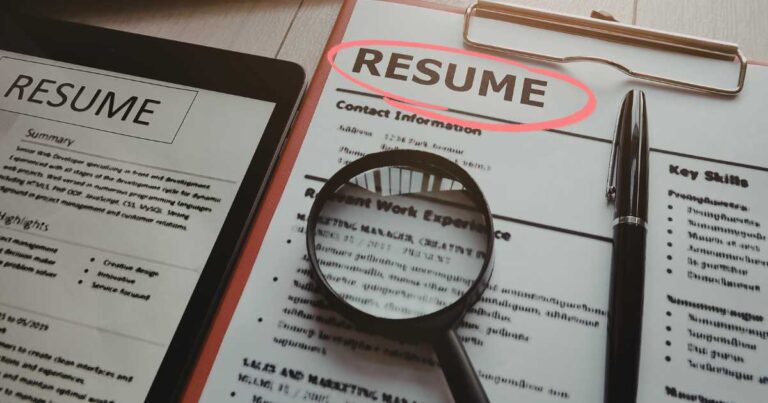
When I started Germandia, I initially believed that one of the main problems was the CV. And the German CV certainly matters. International applicants often do not know how German recruiters evaluate applications or how quickly a CV needs to communicate a clear professional profile.
But the more CVs I analysed and the more people I spoke with, the clearer it became that CV optimisation alone cannot solve the problem. Some candidates have a good CV and are invited to several interviews, yet still do not receive an offer. Others apply for positions that do not really correspond to their professional experience.
This means we have to look beyond the document itself. Does the candidate understand the position? Can they explain their professional profile clearly? Do their qualifications actually match the requirements? Can they communicate confidently during an interview? Do they understand what a German employer expects?
This is why my work with Germandia has increasingly moved beyond CV optimisation towards understanding the entire German hiring process.
Understanding the German Hiring Process
One of the issues I discussed during my visit to the Hamburg Senate is that many international professionals arrive without a realistic understanding of how recruitment in Germany works. A person can be highly qualified and still struggle if they do not understand how employers assess candidates.
I regularly see applicants who recognise several familiar technologies in a job advertisement and immediately apply. But knowing some of the technologies listed in an advertisement does not automatically mean that the position matches someone’s professional profile. Candidates need to understand the actual role, distinguish essential requirements from additional requirements and assess whether their professional experience genuinely fits what the employer is looking for.
Professional positioning is particularly important. If someone applies for Software Developer, Business Analyst, Project Manager, Data Analyst and IT Consultant positions using essentially the same CV, it becomes difficult for a recruiter to understand where that person’s real expertise lies.
This is why one principle has become central to my work with candidates:
One CV should tell one clear professional story.
The German government’s official portal Make it in Germany also provides international applicants with guidance on searching for jobs and preparing applications for the German labour market.
Official German information about job applications
German Language Skills Are Part of Professional Integration
Another important subject in my conversation at the Senate Chancellery was the German language. There are certainly jobs in Germany where English is sufficient, particularly in international companies and some areas of IT. However, this can sometimes create the impression that German will not be important once someone is living here.
From what I observe, the reality is much more complicated. German affects not only employment opportunities but also communication with colleagues, dealing with authorities, understanding documents, everyday independence and social integration.
Many people plan to learn German after arriving. But once they are here, they suddenly have many other things to manage at the same time. They may be studying, working part-time, searching for qualified employment, dealing with bureaucracy and paying rent and living expenses. Learning a language then becomes another major task on an already long list.
This is one reason I increasingly believe that preparation for Germany needs to begin before arrival.
Bringing Skilled Professionals to Germany Is Only the Beginning
Germany needs international skilled professionals, and India has an enormous pool of qualified people. But attracting skilled workers and successfully integrating them into the German labour market are not the same thing.
A visa allows someone to enter Germany. University admission allows someone to study here. A degree proves academic achievement. None of these things automatically prepares a person to understand the German labour market, communicate with employers, navigate everyday life or build a long-term career.
This was one of the central messages I wanted to bring to the Hamburg Senate Chancellery. If Germany wants to attract international talent successfully, we should not only discuss how people can come to Germany. We also need to discuss what happens to them afterwards.
What I Brought to the Hamburg Senate
I was grateful for the opportunity to discuss these observations directly with Julie-Ann Shiraishi. It was an open exchange in which questions were asked, different perspectives were discussed and the issues I raised were documented.
For me, this was particularly important because the experiences people have been sharing with me for years were no longer only individual conversations. I had the opportunity to bring these observations into an institutional discussion and speak about what I see through my direct contact with Indian professionals in Germany.
I do not expect one meeting to solve these problems. But I believe that problems first need to be heard and understood before meaningful solutions can develop.
And I left the meeting with an even stronger conviction than before:
We cannot wait until people are already struggling in Germany before we start preparing them. Preparation needs to begin much earlier.
For many future students and professionals, that means it needs to begin in India.
In Part 2, I will explain why I believe preparation should start before people leave India, what role universities and institutions could play, why I am developing the Germandia Academy, and why I am prepared to travel to India myself to speak directly with students and professionals about the reality of working and living in Germany.
Indian Professionals in Germany Need Preparation Before Arrival
My visit to the Hamburg Senate Chancellery confirmed something I have been thinking about for a long time. If we want Indian professionals to build successful careers and lives in Germany, we cannot begin preparing them only after they have arrived.
Once people are already in Germany, many are under considerable pressure. They have rent and living expenses, health insurance, bureaucracy, university studies or a job search to manage. Some have invested substantial savings in coming to Germany or have financial obligations in India. At the same time, they are expected to improve their German, understand an unfamiliar labour market and learn how the German hiring process works.
That is why I believe we need to reach people earlier, ideally while they are still in India and considering whether Germany is the right choice for them.
Why Indian Professionals in Germany Need Better Preparation
Preparation should not end with information about visas, university admissions, blocked accounts and residence permits. These things are important, but they are only the administrative side of moving to another country.
Someone planning a future in Germany should also understand how the German job market works, what German employers expect, how applications are evaluated and why professional positioning matters. They should know that recognising several familiar technologies in a job advertisement does not necessarily mean that the position is a good match for their experience.
They should also understand the role of German language skills, what everyday life can look like, what cultural differences they may encounter and what rights and responsibilities they will have once they live and work here.
The goal is not to frighten people. It is to allow them to make an informed decision and prepare for that decision properly.
Why I Want to Speak at Universities in India
One of my next goals is therefore to approach universities and institutions in India. I would like to speak directly with students and professionals who are considering studying or working in Germany, and I am prepared to travel to India to give lectures and workshops.
Students planning to study in Germany need to think beyond admission to university. They also need to ask what will happen after graduation. What kind of employment will their degree prepare them for? What additional skills might German employers expect? How much German will they need? How can they start building a professional profile before graduation?
These questions should not first become urgent when someone has finished university and suddenly needs to find employment in order to remain in Germany.
My message would therefore never be, “Do not come to Germany.” It would be, “If Germany is your goal, understand what awaits you and prepare before you come.”
We Also Need to Talk About Those Who Did Not Succeed
There is another side of international mobility that receives much less attention. People naturally hear about those who came to Germany, graduated, found good jobs and built successful careers. These stories are valuable and encouraging, but they do not represent every experience.
There are also people who have spent months searching for qualified employment. Some have sent hundreds of applications. Some have used a significant part of their savings while looking for work. Others have discovered too late that their professional positioning, German language skills or understanding of the labour market were not sufficient for the jobs they wanted.
And some eventually return to India.
Those people are unlikely to return to universities and give presentations about why their plans did not work out. As a result, future students and professionals may hear much more about success than about the difficulties that can occur.
I believe they deserve an honest picture of both.
The Germandia Academy: Preparing People for Working and Living in Germany
This is one of the reasons I am currently developing the Germandia Academy. My original idea was much more focused on CVs and job applications, but my work with Indian professionals has shown me that the problem cannot be solved with application documents alone.
The Academy is intended to connect the different areas that people need when preparing for Germany. This includes understanding the German labour market and hiring process, professional positioning, German CVs and applications, job interviews, German language and communication, workplace culture, everyday life, integration and an understanding of rights and responsibilities.
Official information about visas, recognition, employment and immigration already exists. The German government’s Make it in Germany portal, for example, provides extensive information for international professionals. Germandia should not duplicate that information. The purpose is to help people understand how these different issues affect their real life and professional future in Germany.
Official information for international professionals: Make it in Germany
German Should Not Begin After the Flight
German language preparation is an important part of this approach. I do not believe that everyone needs to speak perfect German before coming to Germany. But there is a major difference between arriving with no German and arriving with a foundation that can be developed further.
More importantly, people need to start using the language, not only studying it.
I have met people who know grammar and vocabulary but are afraid to speak because they believe their German is not yet good enough. That fear can become a serious barrier in everyday life and later in the workplace.
This experience is also behind my book “Speak German Without Fear – The DSOA Method.” I wrote it to encourage learners to use the German they already know and to integrate speaking into everyday life instead of waiting for the moment when they believe they are finally fluent enough.
Speak German Without Fear – The DSOA Method
Integration Also Means Knowing Your Rights
There is another subject that I believe belongs in preparation for Germany. International professionals hear a great deal about their obligations, but they should also understand their rights.
Someone who does not understand the language, employment system or institutions of a country can become dependent on other people for information. They may not know whether something an employer, landlord or another person tells them is actually correct. They may not know where to seek independent advice or assistance.
Preparing people for Germany should therefore also help them understand where reliable information can be found and where they can turn when they need support.
Successful integration should ultimately help people become independent and confident enough to navigate their own lives in Germany.
I Do Not Want to Wait for Someone Else to Solve the Problem
I am grateful that I had the opportunity to raise these issues at the Hamburg Senate Chancellery. Having these conversations at an institutional level matters, and I hope they contribute to a broader discussion about how international professionals are prepared and supported.
But political and institutional processes take time, while people are facing these problems today.
That is why I do not want to wait.
I have already started approaching organisations and institutions, and I want to begin contacting universities in India. I am preparing lectures and developing the Germandia Academy. If a university or organisation in India gives me the opportunity to speak directly with students and professionals, I am prepared to travel there and do it personally.
Germandia is still small, and I cannot reach thousands of people at once. But that does not mean I should do nothing. If better information helps even a small number of people avoid serious mistakes and arrive in Germany better prepared, it is worth doing.
From Skilled Immigration to Successful Integration
Germany needs international professionals, and India has an enormous pool of qualified and ambitious people. But bringing these two sides together successfully requires more than creating a route from India to Germany.
We need to think about the entire journey: before arrival, during the transition and after people begin their lives in Germany.
For me, the central question has therefore changed.
It is no longer only:
How can we bring more Indian professionals to Germany?
It is:
How can we prepare Indian professionals so that they have a realistic chance of building a successful career and life in Germany?
That is the issue I brought to the Hamburg Senate Chancellery.
It is the issue I want to bring to universities and institutions in India.
And it is the direction in which I want to continue building Germandia.
Further Reading on Germandia
If you are preparing for the German job market, these Germandia resources provide practical guidance on applications, CVs and recruitment in Germany.
How to Apply for Jobs in Germany
About the Author
Anita Grabowski is the founder of Germandia. She supports Indian professionals in understanding and navigating the German job market, with a focus on professional positioning, CVs and applications, the German hiring process, language, workplace preparation and integration.
Her work grew from years of direct contact with people from India and the recurring difficulties she observed when qualified professionals tried to build their careers and lives in Germany.
Sources
Official information about working, studying, immigration and integration in Germany:
Make it in Germany, Federal Government of Germany
Make it in Germany: Job Applications
Make it in Germany: Preparing International Employees for Germany